Drone Photography for Construction in Los Angeles
Aerial footage has quietly become one of the most practical tools on an LA job site, from tracking progress to winning the next bid. Learn what construction drone work can do, the FAA rules that apply
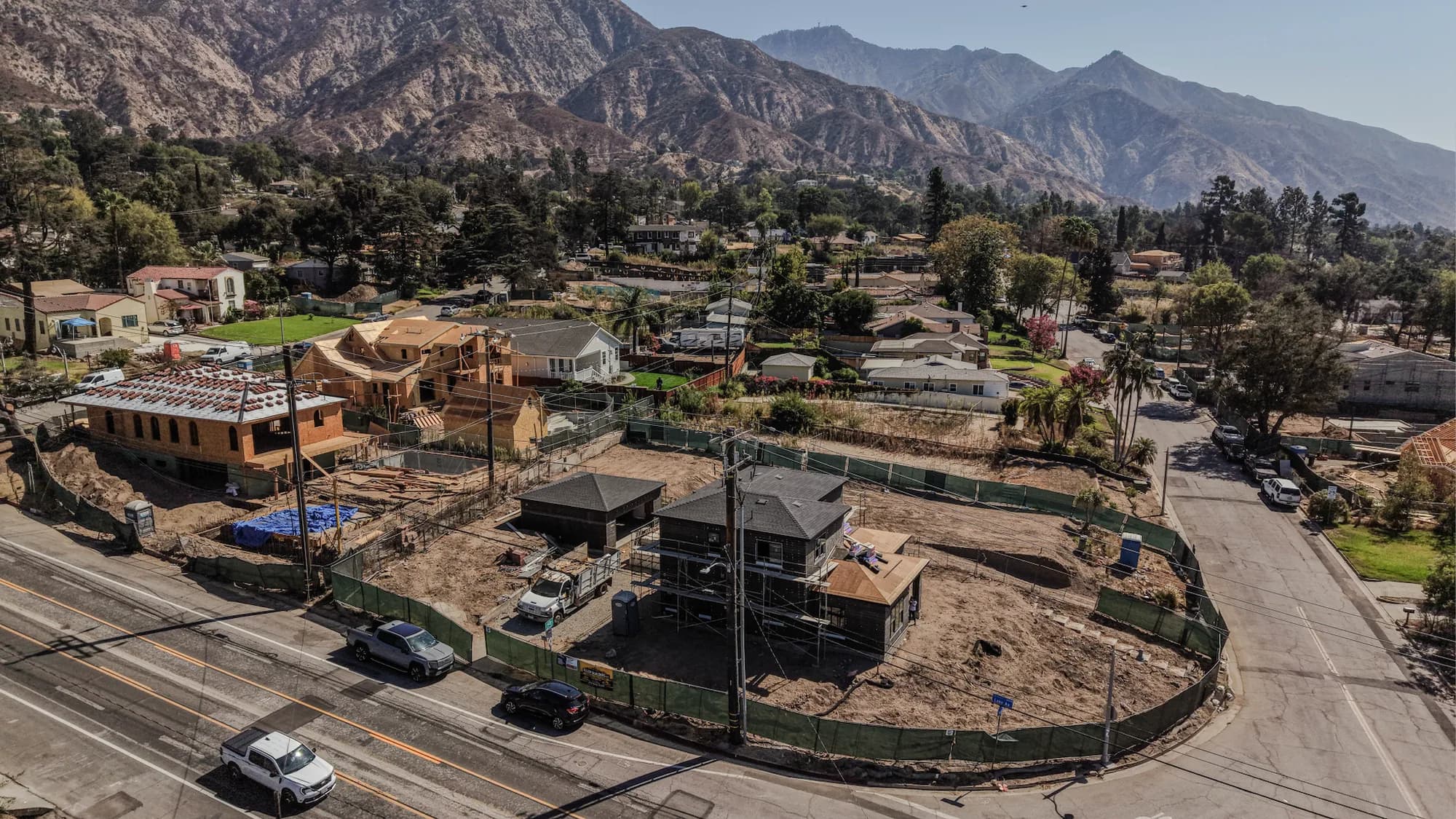
Drone Photography for Construction: What LA Builders Should Know
Drones stopped being a novelty on Los Angeles job sites a while ago. Walk past enough active projects across the San Fernando Valley and you will notice the same thing: the firms that look the most buttoned-up are the ones documenting their work from the air. Aerial imagery has quietly become one of the most practical tools a builder can add to a project, and not only for marketing.
If you run construction, development, or a specialty trade in LA, here is a plain-English look at what drone photography and video can do for you, what the rules actually are, and how to choose an operator who will not create a headache on your site.
What builders use drone imagery for
Progress documentation. A monthly aerial pass gives you a clean, dated visual record of the entire site from foundation to finish. That record is useful for internal tracking, for resolving disputes, and for keeping owners and lenders confident that the project is moving.
Marketing and sales. A polished aerial reveal of a finished project is one of the strongest assets a construction company can own. It makes your bids more persuasive, your website more credible, and your social content far more scroll-stopping than another photo of a parking lot. When you are competing for the next job, showing the last one from the air is a quiet flex that works.
Stakeholder and investor updates. Instead of describing progress in an email, you can show it. A short monthly aerial edit keeps owners, partners, and investors engaged without another site visit.
Site logistics and planning. Top-down overviews help teams see the whole site at once: staging, access, sequencing, and how the pieces fit. It is a fast way to get everyone looking at the same picture.
Safety and hard-to-reach inspections. Roofs, facades, towers, and other awkward spots can often be captured from the air instead of sending someone up. That is a safer, faster way to get eyes on the parts of a build that are difficult to reach.
The legal part, kept simple
This is the piece that trips people up, so it is worth being clear. Flying a drone for any business purpose in the United States is commercial work, and commercial work has to be flown under the FAA's Part 107 rules. In practice that means the person flying holds a Part 107 Remote Pilot Certificate. This is not optional, and it applies even when you are filming your own project on your own property.
Los Angeles adds a second layer: airspace. Much of the LA basin and the San Fernando Valley sits under or near controlled airspace tied to airports like LAX, Hollywood Burbank, Van Nuys, and Santa Monica. Flying in controlled airspace requires authorization, which licensed operators typically obtain through the FAA's LAANC system before the flight. A qualified operator will know how to check the airspace over your specific site and secure that authorization ahead of time.
The takeaway for a builder is straightforward: hiring a licensed, insured operator keeps your project compliant and keeps your site covered if anything goes wrong. It is not the place to cut a corner.
What good construction drone deliverables look like
A strong operator should be able to give you more than a few pretty shots. Depending on the job, useful deliverables include high-resolution stills for reports and marketing, clean top-down site overviews, cinematic marketing edits of finished work, and monthly progress reels that stitch your build together over time. A before, during, and after sequence of the same site is one of the most compelling stories a construction company can tell.
How often should you fly?
For active projects, a monthly cadence works well for progress tracking, with extra flights at key milestones: site prep, foundation, framing or topping out, exterior completion, and the final reveal. That rhythm gives you a usable timeline of the whole build without overspending on flights you do not need.
How to choose a local operator
Not every drone pilot is set up for construction work. Before you hire, check that the operator is Part 107 certified, carries liability insurance, and has real experience on active sites, which means they understand site safety and know how to coordinate with a super instead of wandering into the middle of a pour. Confirm they can deliver the file formats you actually need, and that they know how to handle LA airspace. A local operator who already works around the Valley's airspace will save you time and guesswork.
For context, we have produced construction progress videos and drone work for Los Angeles builders and retrofit companies, so we understand both the compliance side and the reality of filming around an active crew.
Frequently asked questions
Do I need a permit to film my own construction site with a drone?
If it is for your business, yes, the flight has to be conducted under Part 107 by a certified remote pilot. And if your site is in controlled airspace, which much of LA is, the flight also needs airspace authorization. Owning the property does not remove those requirements.
How often should we schedule flights?
A monthly progress flight plus flights at major milestones is a solid default for most active projects. Your operator can help you set a cadence that matches your timeline and budget.
Can you combine drone footage with ground-level video?
Yes, and you usually should. Aerial establishing shots paired with ground-level detail and interviews make for a far more complete story than either on its own.
Is drone footage really worth it for marketing and bids?
For construction, it is one of the highest-impact visuals you can own. Aerials communicate scale and progress in a way ground photos cannot, which makes them strong for social content, project pages, and pitches for the next job.
Put your projects in the best light
We Nailed It! Media is a Filipino-owned video and marketing team based in Canoga Park, serving Los Angeles and the San Fernando Valley. We combine compliant, professional drone work with full-service video and marketing, so your footage does not just sit on a hard drive, it goes to work for your brand.